Torsion vs. extension spring setup
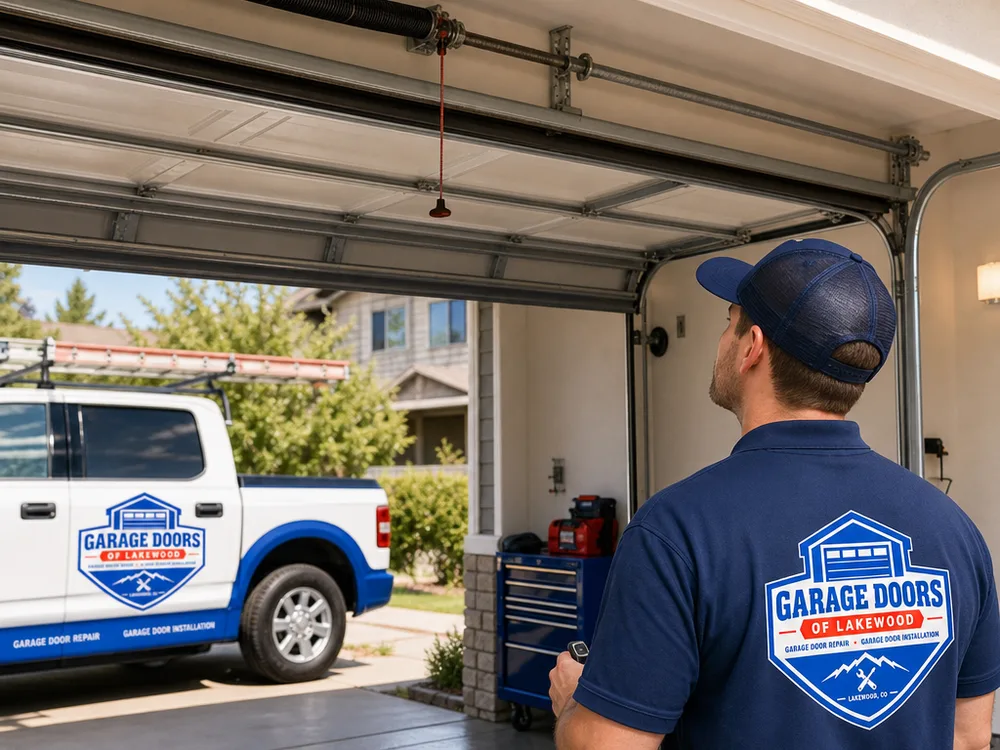
Torsion springs mount on a shaft above the door; extension springs run along the horizontal tracks. Identifying the system determines the correct parts and procedure.
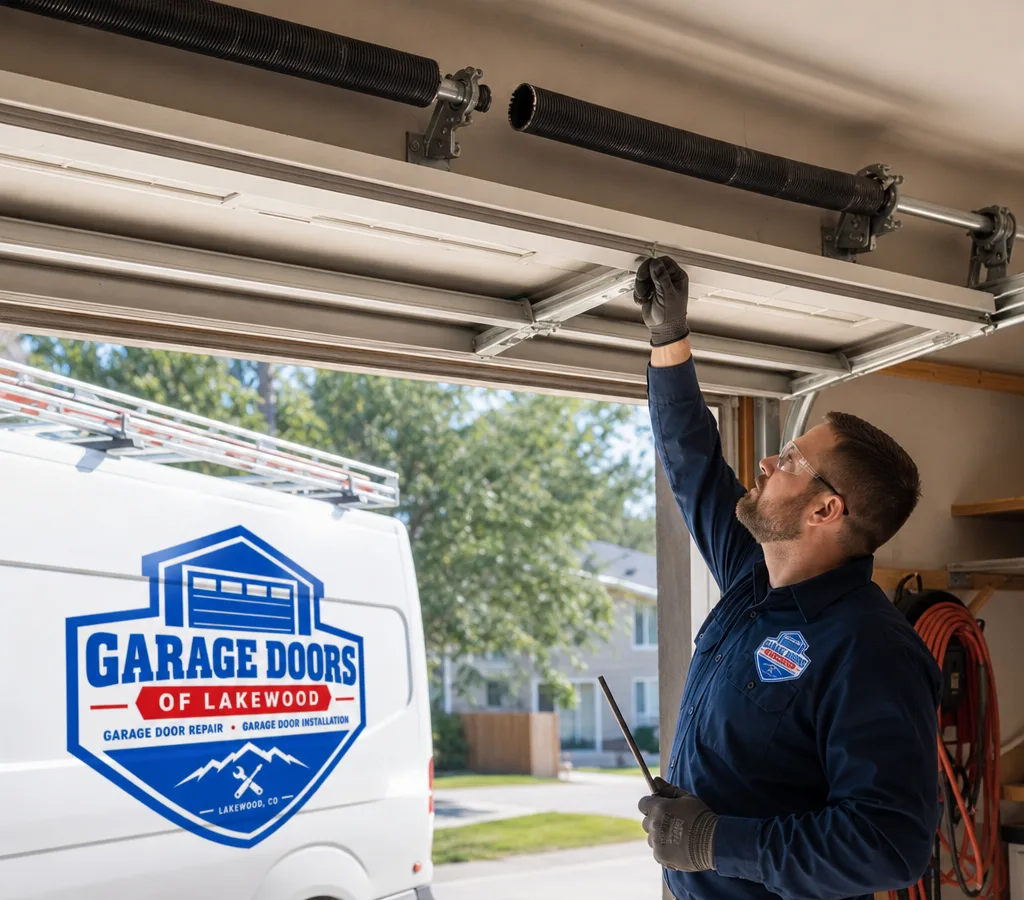
Describe what the door is doing once and we'll connect you with a local contractor who handles spring repairs and replacements.
CALL NOW: (983) 212-2330Broken spring warning signs
Garage door spring repair is the fix for a door that suddenly feels impossibly heavy, won't open, or opens a few inches and stops. Springs carry most of the door's weight. When a spring fails, the opener is no longer lifting a balanced door—it's trying to dead-lift the full load.
Common signs of a broken garage door spring:
In Lakewood, many garages see big temperature swings through the year. Cold snaps can make old steel more brittle, and a spring that was already near the end of its cycle life may break on the next use.
Because springs are under high tension, this is one of the few garage door problems where the safest next step is to stop using the door and talk with a contractor who repairs springs regularly. Broader garage door repair service can also cover rollers, tracks, openers, and alignment.
When you call Garage Doors of Lakewood, you explain what you're seeing once. We take the details and connect you with a local contractor who can diagnose the spring setup and walk you through the repair options.
Spring system diagnosis
Torsion springs mount on a shaft above the door; extension springs run along the horizontal tracks. Identifying the system determines the correct parts and procedure.
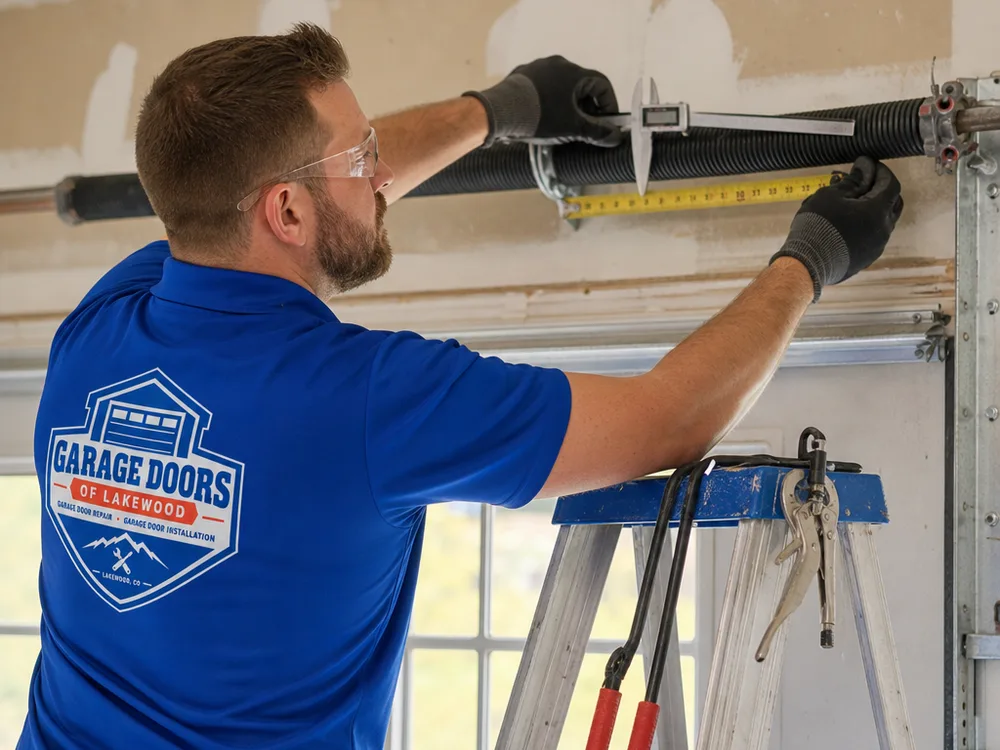
Wire size, inside diameter, length, and wind direction matter. Correct sizing is what makes the door balance at mid-travel instead of drifting up or slamming down.
A broken spring can let cables jump grooves or unwind. The contractor checks for frayed cables, loose set screws, and drums that are out of alignment.
Worn bearings add drag and noise and can contribute to uneven lifting. Hardware is inspected while the shaft is accessible.
After the door is rebalanced, the opener's force settings and travel limits may need adjustment so the system runs smoothly without overworking.
From diagnosis to balanced travel
The contractor verifies whether the issue is a spring failure or something else, like a jammed roller or off-track door. If a spring is broken, the door is secured in place so it can't drop unexpectedly.
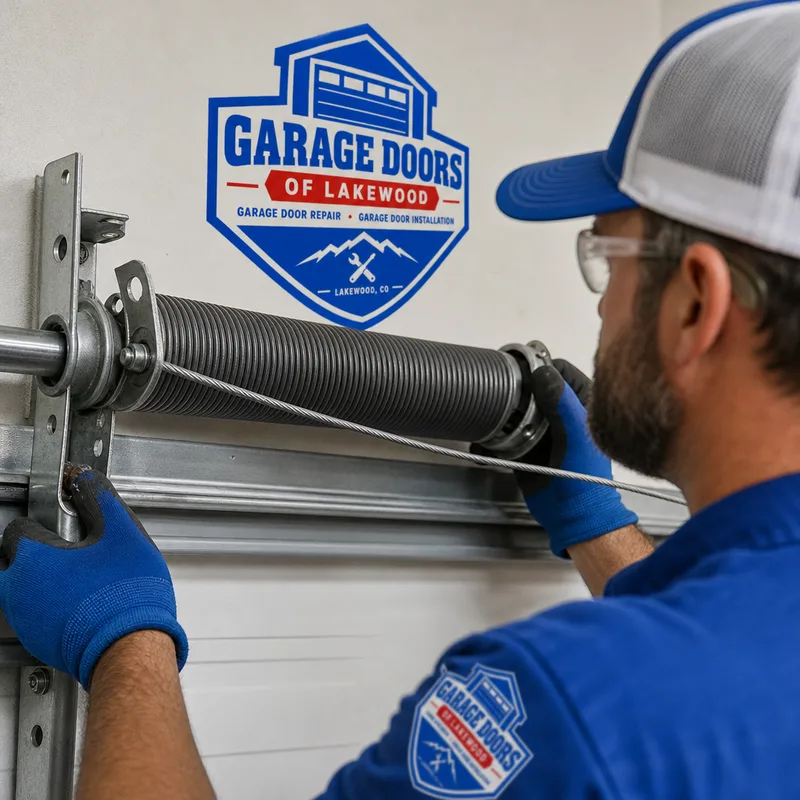
For torsion systems, the spring is matched by wire size, inside diameter, length, and wind direction. For extension systems, the stretch rating and hardware are matched so the door can balance correctly.
The broken spring is removed and the new spring is installed. Cables, drums, bearings, and fasteners are checked while the system is apart, because spring failure can reveal other wear.
The door is tested by hand for balance and smooth travel. Once the door is correctly counterbalanced, the opener is tested and adjusted as needed so it isn't lifting an unbalanced door.
If the door is stuck closed or suddenly feels too heavy, describe the symptoms once and we'll connect you with a Lakewood-area contractor who handles broken spring repair.
CALL NOW: (983) 212-2330Spring and balance details
Questions before you call
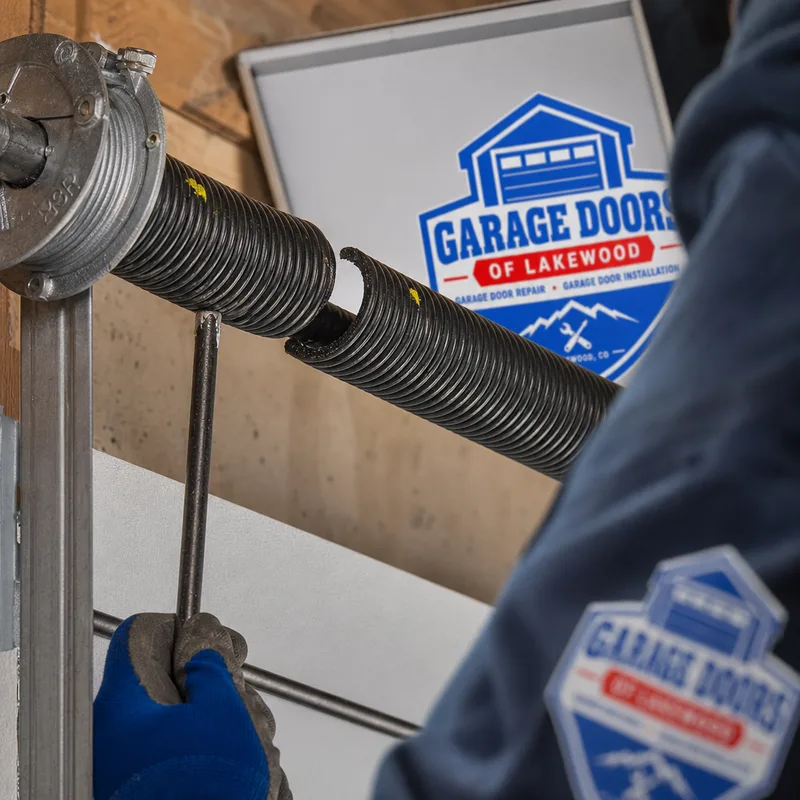
A torsion spring break usually shows a visible gap in the spring mounted above the door, while extension spring issues are typically found along the horizontal tracks on either side. If you can't see a break, another clue is door behavior: a torsion setup often fails with a loud snap and a door that won't lift at all, while extension systems may lift unevenly if one side fails. The contractor you're connected with can confirm the spring type and failure point once they see the setup.
Operating a door with a broken spring is risky because the door is no longer counterbalanced and can drop or bind. Using the opener can also strain or damage the opener because it is trying to lift far more than it was designed to handle. If the door is partially open, keep people clear of the opening and talk with a contractor about the safest way to secure it before any repair work begins.
On many two-spring torsion systems, replacing both springs is commonly recommended because the springs are usually the same age and cycle count. If one spring has failed, the other may be close behind, and mismatched springs can make balancing the door harder. The contractor can explain what your door uses and why they recommend a single spring replacement or a pair.
The most helpful details are the door size if you know it, whether it's a single or double door, and what the door is doing right now—won't open, stuck open, opens a few inches and stops, or made a loud bang. If you can safely look, note whether springs are above the door or along the tracks. A clear description helps the contractor arrive prepared for the correct type of broken spring repair.
During spring repair or replacement, the door is typically kept secured and the opener is disconnected while the spring tension is handled. The door is tested by hand for balance before the opener is used again. Actual downtime depends on whether parts like cables, bearings, or pulleys also need attention, but the goal is to restore safe, balanced operation before the door is put back into regular use.
Garage Doors of Lakewood is a referral service that connects you with an independent local contractor who performs the work. You describe the issue once on the phone, then you speak directly with the contractor about diagnosis, scope, and scheduling, and you decide whether to proceed.
If you suspect a broken garage door spring, pick up the phone and describe what you're seeing. We'll connect you with a local Lakewood-area contractor who can handle torsion spring replacement or extension spring repair and get your door balanced again.